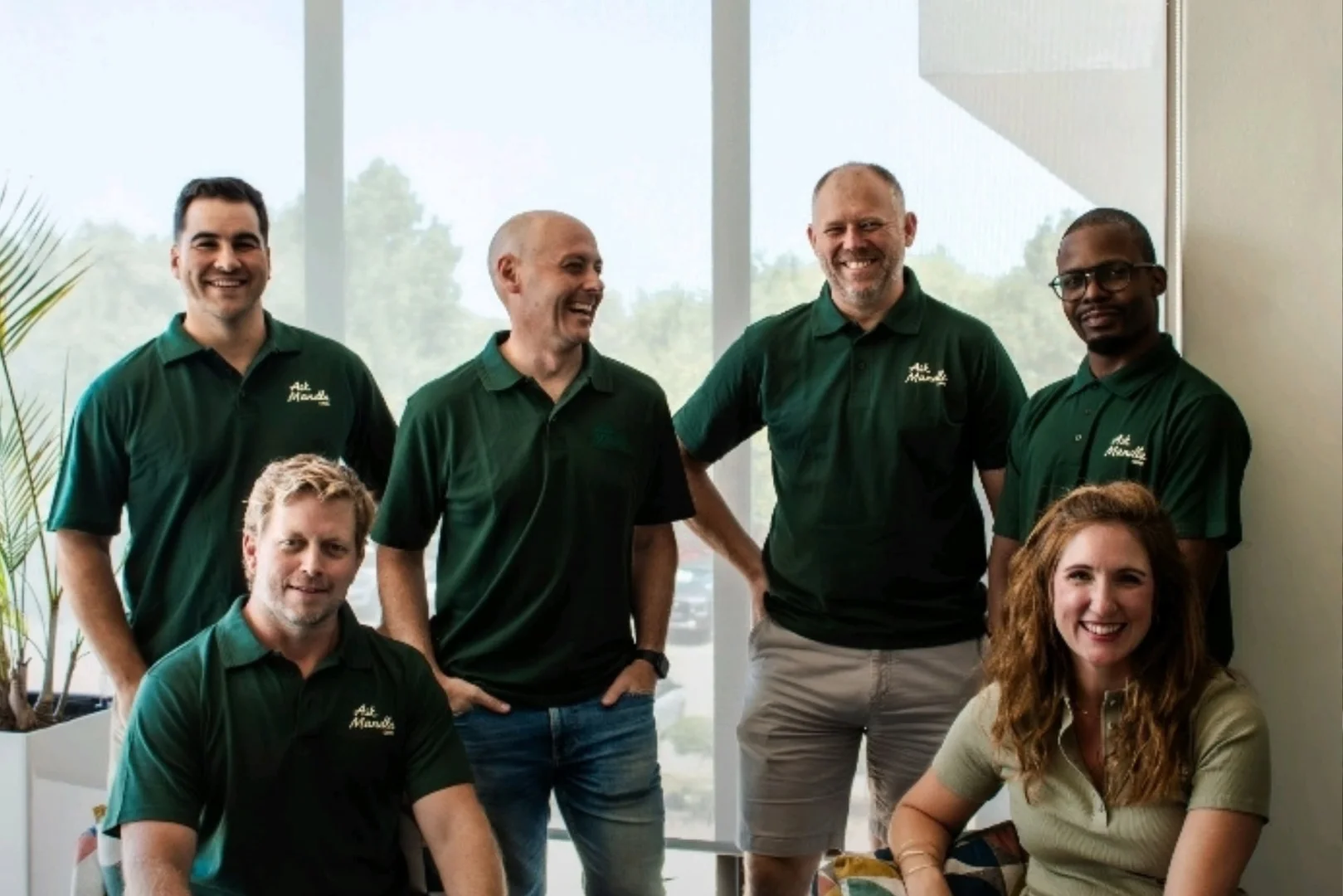
AskMandla, a South African platform that formalises domestic employment through WhatsApp, is targeting the roughly 1.6 million domestic workers in the country and the households that employ them, around 80% of whom work without a written contract, UIF registration or payslip. Launched on May 1 last year, the platform runs on WhatsApp because that is where domestic workers already are, rather than requiring a separate app or web portal.
For the household employer, the platform turns the administrative side of employment, including the contract, registration with the Unemployment Insurance Fund (UIF), monthly payslips and ongoing admin, into a conversation with an AI assistant called Mandla. For the worker, it produces a payslip and a documented employment record, along with Earned Wage Access (EWA), which lets them draw part of wages already earned before the end of the month.
Ean Barnard, head of growth at AskMandla, told Disrupt Africa that the payslip is the part that matters most for the worker's longer-term position. "A monthly payslip isn't just paper. For someone who has worked informally for years, that payslip is the first document a bank will accept as proof of income. That's how someone becomes visible to the formal financial system. EWA is just the first product riding on that infrastructure, more are in the pipeline."
The platform grew out of Shesha-LawZA, a domestic-labour service created by AskMandla's chief legal officer Janine Kane-Berman that gave employers and workers access to contracts and compliance guidance through a mobile app. According to Barnard, the legal content worked but the delivery method did not fit the audience. "Domestic workers don't sit at desks. They live on WhatsApp. So, in 2025 the team rebuilt the platform from the ground up to be WhatsApp-first and conversational, and AskMandla was the result."
Barnard framed the size of the gap in financial terms, citing ZAR107 billion (US$6.5 billion) a year in domestic-worker wages flowing outside the formal financial system. He argued that existing tools do not reach this segment, with payroll products such as Sage and SimplePay built for larger organisations and earned-wage providers such as Paymenow and Floatpays oriented toward formal employers rather than households.
"The existing fintech infrastructure for low-income South African workers is genuinely good. It just stops at the door of the formal employer. AskMandla is the layer that brings the household-employed worker across that threshold. Once we've formalised the relationship, with a contract, UIF registration and a monthly payslip, that worker is visible to the formal financial system for the first time," Barnard said.
In its first year, the platform processed over ZAR5 million (US$300,000) in domestic-worker salaries and issued nearly 1,000 payslips, having raised some pre-seed capital. Barnard said monthly churn is below 2%, which he contrasted with higher churn rates common among household services. "In a market where most household services have churn rates in the double digits, this tells us people stay because the product works for them. They don't get stuck. They aren't trapped by a contract. They choose to renew, every month, on WhatsApp," he said.
The company operates only in South Africa, with subscribers concentrated in the suburbs of Johannesburg, Cape Town and Durban, where domestic employment density is highest. Barnard said expansion to other countries would require rebuilding the legal layer for each country's labour code, since the platform's AI agents are coded around South African labour law, and that the company is not pursuing that this year.
AskMandla's business model has two layers. Household employers pay a monthly subscription for the compliance and payroll service, which Barnard said is priced at roughly one-tenth of the cost of alternatives. The second layer is financial services, beginning with Earned Wage Access, which launched in April.
"The fees are set upfront before each transaction, are matched to the customer's income level, and have no hidden charges," said Barnard. "We've been deliberate about this: there is a long history of predatory lending products dressed up as access to wages, and we don't want to be any part of that pattern. Savings, insurance and healthcare cover are next on the same fintech layer." The subscription serves as the way to acquire customers, while the financial services are where the company expects revenue to grow, since each employment record makes a worker visible to the financial system.